
Thyme
Here's who can use it and how

Thyme is so much more than just a kitchen spice. This plant that is also found in mouthwashes and decongestants has multiple uses as an antibacterial, antifungal, antiseptic and more. We know from ancient writings that the Romans used it as a meat preservative. They also used it to treat coughs and rid the body of intestinal worms. Through the Medieval times it was used as an antiseptic, particularly to treat the plague. Later, in 16th Century England, it was considered effective against leprosy.
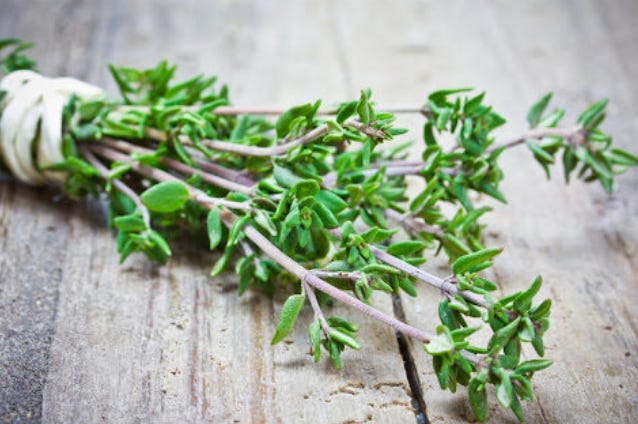
Thyme fights bacterial and fungal infections. And because it’s also known as a cough expectorant, it has been used for colds, bronchitis flu and whooping cough. Studies have shown that thyme oil can inhibit the MRSA bacterial strain by 50%. Other research shows that thyme can fight the bacteria that causes strep throat and pneumonia. One recent study showed that thyme oil inhibits the growth of a deadly fungus that can be dangerous to those recovering from surgery or from transplants.
